ÔN THI VÀO LỚP 10 MÔN TIẾNG ANH CHUYÊN ĐỀ: TỪ VỰNG A. LÝ THUYẾT
Để làm tốt dạng bài tập này truớc hết các em phải có một vốn từ vựng phong phú. Khi học một từ mói các em nên học tất cả các từ loại liên quan, bao gồm cả tiền tố hoặc hậu tố cấu tạo từ trái nghĩa.
Khi làm bài các em cần chú ý những điểm sau: – Động từ chia ở thời nào, theo chủ ngữ số ít hay số nhiều; – Danh từ số ít hay số nhiều; – Từ cần điền là tính từ hay trạng từ; – Cần cân nhắc về nghĩa trong câu với những từ có cùng từ loại.
B. LUYỆN TẬP Exercise 1: Choose the correct option A, B, C, or D to complete the following sentences.
1.Minh’s compositions are full of mistakes but they are very__________ . A.imaginative B. imaginary C. imagination D. imaginable 2.Avoid eating chips if you want to lose weight; they’re very____________ . A.fatten B. fattening C. fatter D. fattest 3.Scientists always__________their data before writing up the results of their research. A.analyse B. analysis C. analyses D. analyst 4.We are encouraged by our professors to________ and express our own opinions. A.formula B. formulae C. formulate D. formulaic 5.Our professor__________said to turn in the assignment on Friday. A.specific B. specifically C. specifying D. specifyingly 6.Students can gain________ benefits from learning to work together. A.considerate B. considering C. consideration D. considerable 7.The job as housing supervisor requires excellent_____________skills. A.administration B. administer C. administrative D. adminstratively 8.This advertisement for lemon__________ is very effective. A.concentrate B. concentrating C. concentrated D. concentration 9.The______ dressed woman in the advertisement has a posed smile on her face. A.stylish B. stylishly C. stylistic D. stylistically 10.Most people can_________ clearly between a real and a simulated smile. A.differ B. different C. difference D. differentiate Exercise 2: Supply the correct verb form to complete the following sentences. 1.Don’t believe a word he says. He’s a terrible(lie)_____________ . 2.Many modem refrigerators never need to be (frost)___________ . 3.The Pikes live in a four-bedroomed bungalow in a very nice (reside)_______area. 4.The rhinoceros, whose numbers have dropped alarmingly in recently, has been declared a(n) (danger)_________ species. 5.Alice is far too (responsible)________ to be put in charge of all those children. 6.We had a (terrify)__________ time in the mountains – I’m not going back there again. 7.I am currently researching the reasons why birds (migration)_______ in the winter. 8.During the Industrial Revolution, there was a complete (transform)______of society in urban areas. 9.I’m not sure if this sweater is (wash)__________ or not. 10.I don’t know why it caused so much (embarrass)__________ . Exericse 3: Mark the letter A, B, C or D to indicate the word(s) CLOSEST in meaning to the underlined word(s) in each of the following questions. 1. WWF was set up in 1961 and had its operations in areas such as the preservation of biological diversity. A. difference B. abundance C. variety D. plenty 2. The beach was heavily polluted because of the amount of waste left there. All this rubbish is killing fish and other marine life. A. sea plants B. sea mammals C. water life D. sea creatures 3. Some of WWF’s missions are: conserving the world’s biological diversity, ensuring the use of renewable natural resources, and promoting the reduction of pollution. A. jobs B. careers C. tasks D. actions 4. Air pollution is a consequence of fossil fuel burning by motor vehicles, factories, aircraft and rockets. A. product B. example C. harm D. result 5. Global warming is the gradual increase of temperature on the Earth’s surface due to greenhouse effect. A. steady B. slow C. sharp D. abrupt
C. ĐÁP ÁN Exercise 1: 1. A 2.B 3. A 4. c 5. B 6.D 7.C 8. A 9. B 10. D Exercise 2: 1.liar 2.defrosted 3. residential 4.endangered 5.irresponsible 6. terrifying 7.migrate 8.transformation 9.washable 10. embarrassment Exercise 3 1. C 2. C 3. C 4. D 5. D
FLC Villas Dạ Lan Event Cảnh đẹp đêm hè vắng tiếng ve. Gió mát rung rinh gợn sóng nước. Trong vắt mùi hương phảng phất bay.
Ôn luyện thi vào 10 THPT
Chuyên ôn luyện các em từ lớp cấp 2, tiếng Anh 6,7,8,9 vào 10 các trường THPT uy tín.
ĐỀ TUYỂN SINH LỚP 10 MÔN TIẾNG ANH
CÓ ĐÁP ÁN NĂM 2020 – 2021
A. MULTIPLE CHOICE (8.0 points)
I. Mark the latter A, B, C or D to indicate the word whose underlined part differs from the other three in pronunciation in each of the following questions.
1.A. columnist B. frustrated C. study D. adulthood
2.A. safari B. variety C. versatile D. operate
II. Mark the letter A, B, C or D to indicate the word that differs from the other three in the position of primary stress in each of the following questions.
3. A. mischievous B. supportive C. interview D. educate
4. A. honest B. system C. subject D. polite
III. Mark the letter A, B, C or D to indicate the correct answer to each of the following question.
5. Wooden clogs have been the simple _____ of Vietnamese women for ages.
A. symbol B. mark C. sign D. signal
6. Rickshaw looks ____ in each ____ of Vietnam: Hanoi’s rickshaw is wider and low. Hue’s is a bit
narrower but longer, Saigon’s rickshaw is tall and long.
A. different – area B. the same – part
C. different – region D. differently – region
7. Survey findings ____ that the current family remains an important production unit of society.
A. express B. show C. explain D. record
8.Many workers wish that they ____ labour contracts with the company
A. were signing B. sign C. signed D were signed
9. The photos by a British diplomat capture the ____ of old bicycles, crowed electric trams, the queue to
buy goods and lines of barrels waiting to collect water in the 1980s.
A. minds B. thinking C. ideas D. images
10.The life at that time was very difficult ____ every family tried to buy a branch of peach blossoms to display on the Lunar New Year Festival.
A. despite B. although C. but D. so
11. We suggest that the authorities ____ street children from following foreign tourist in the downtown.
A. should stop B. will stop C. stopped D. would stop
12. After they ____ their breakfast, they ____ shopping yesterday.
A. have/go B. had had/ go
C. had/ had gone D. had had/ went
13. It was raining, ____ we cancelled the trip to the beach.
A. although B. because C. so D. but
IV. Mark the letter A, B, C or D to indicate the underlined part that needs correct in each of the following questions.
14. The teacher asked him why hadn’t he done his homework, but he said nothing.
A B C D
15.Pay attention of the traffic lights when you are travelling in the street.
A B C D
16. Peter was the first scored a goal for his team in the yesterday’s match.
A B C D
V. Mark the letter A, B, C or D to indicate the correct response to each of the following exchanges
17. Haven’t you done any volunteer work before, Jen?”
– “ ¬¬¬________”
A. No, not now B. Yes, I have never done it
C. Yes, I’ve done it once D. Sure, no problem
18. “ Are you teaching English or Math at Hoa Binh Orphanage?”
– “______”
A. Yes, I am B. No, I’m not
C. English, of course D. I’ll choose literature
VI. Mark the letter A, B, C or D to indicate the word(s) CLOSEST in meaning to the underlined word(s) in each of the following questions.
19. Female firefighters are sometimes the targets of laughter and anger from the coworkers and local people.
A. reasons B. sources C. directions D. victims
20. Many women had to pay a heavy price to win equality.
A. achieve B. lose C. attempt D. respect
VII. Mark the letter A, B, C or D to indicate the word(s) OPPOSITE in meaning to the underlined word(s) in each of the following questions.
21. He’s a wonderful example of a kind- hearted person with good judgement.
A. inhuman B. tolerant C. generous D. sympathetic
22. The situation seemed hopeless and desperation filled them both with anger.
A. pessimistic B. pointless C. promising D. useless
VIII. Read the following passage and mark the letter A, B, C or D to indicate the correct word or phrase that best fits each of the numbered blanks.
A job interview is a chance for you to (23) ______ that you can satisfy all the requirements of the job you are (24)____________for. That is why it is essential to be well-prepared for the job interview.Preparing means knowing about the industry, the employer, and yourself. It also means paying attention to details like personal appearance, (25)__________, and demeanor. Before the interview , you should gather(26) ________information about the industry and the employer as you can. Not only will you appear informed and intelligent but you will also make a decision if a job offer is eventually made. You might also want to prepare for answering questions by listing some of your attributes. Remember that appearance is very important. You should match your dress to employees in the workplace (27) ________you are applying. You should come on time for the interview.
23.A.suggest B. prove C. offer D. recommend
24.A. applying B. asking C. begging D. requiring
25. A. punctual B. punctuality C. on time D. punctuate
26.A.so much B. too much C. as much D. as many
27.A.that B. which C. in that D. where
IX. Read the following passage and mark the letter A, B, C or D to indicate the correct answer to each of the questions.
The system of USA education starts with twelve years of primary and secondary school education which the Americans have to follow. A secondary school (“high school”) diploma or certificate is a compulsory requirement for the student to be able to enter college, university, vocational, secretarial or other professional and technical schools. American children who are around six years of age normally begin their learning at a primary school. It takes from five to six years to complete the primary schooling. After finishing the primary schooling, students will have to enter a secondary school where they may spend 6 or 7 year durations consisting of either two three- year programs, or a three-year and a four-year program. Schools at this level are known as Middle School or Junior High School and High or Senior High School
Completion of this stage is called Twelfth Grade. International students are advised to find out which level of education in their country corresponding to the twelfth grade in the U.S.A.
After completing the twelfth grade, students are admitted to college or university for higher education. Study at a college or university leading to the Bachelor’s Degree is known as “undergraduate” education. Study beyond the Bachelor’s Degree is known as “graduate” school, or “postgraduate” education. Advanced or graduate degrees include law, medicine, M.B.A. (Master), and Ph.D.(doctorate) etc.
The USA has the highest number of educational institutions providing higher education than any other country. There are more than 3800 colleges and universities imparting degree programs. The size of US. higher educational institutions varies greatly, too, from colleges that enroll fewer than 1,000 students to large universities that enroll more than 50,000 students.
28. If a US. student wants to enter a vocational school, he/ she must _________.
A. have at least 12 years of secondary schooling.
B. get a high school diploma
C. complete a senior high school without its certificate.
D. complete two four-year programs at secondary school.
29.Schools at secondary level consist of ___________.
A. Middle Schools and High schools.
B. Middle schools and Junior High schools.
C. High schools and Senior High schools.
D. Junior and Senior schools.
30. According to the text, graduate students are those who ___________.
A. graduated from a high school.
B. are studying a college or a university.
C. are pursuing a Master or Doctorate program at university.
D. graduated from a college or a university.
31. If you want to study a Master program, you ___________.
A. must be a undergraduate student.
B. must get a Bachelor diploma.
C. must finish ‘graduate’ program.
D. must complete a Bachelor program at university.
32. According to the text, which statement below is TRUE?
A. The USA has the best education in the world.
B. The number of the US. colleges and universities is higher than any other country.
C. International students whose level of education corresponds to the 12thgrade in the USA can apply for any programs in a US. university.
D .International students are advised to apply for a US. high school before for a college.
B. WRITING (2.0 points)
X. Rewrite the following sentences using the provided word and keep meaning as that of the root one.
33. The Old Quarter is the noisiest part of the city.
-> No other parts ……………………………………………………………….
34. This place was the most dangerous I’ve ever been.
-> I’ve ……………………………………………………………………………..
35. No other cities in China are bigger than Shanghai.
-> Shanghai is China’s ……………………………………………………..
36. This is the best food I’ve ever eaten in this country.
-> I’ve never …………………………………………………………………..
XI. Complete the second sentence so that it has a similar meaning to the first sentence, using the word in brackets.
37. You can’t understand these things because you are very young (enough)
-> …………………………………………………………………………………………
38. I have so much to do today. (wish)
-> …………………………………………………………………………………………
39. Tom is a playwright as well as an actor. (not only)
-> …………………………………………………………………………………………
40. They did not finish the kitchen on Monday. (wasn’t)
-> …………………………………………………………………………………………
33. no other parts in Hanoi are noisier than the Old Quarter.
34. I’ve ever been to such a dangerous place before.
35. shanghai is china’s biggest city.
36. I’ve never eaten the better food in this country before.
37. you are not old enough to understand these things.
38. I wish I didn’t have so much to do today.
39. Tom is not only a playwright but also as actor.
40. The kitchen wasn’t finished on Monday.
ĐỀ TUYỂN SINH LỚP 10 MÔN TIẾNG ANH
CHUYÊN ĐỀ CÂU ƯỚC CÓ ĐÁP ÁN
A. Cấu trúc câu ước – Wish sentence
Có 3 dạng câu mong ước:
* Cấu trúc câu ước ở hiện tại
KĐ: S + wish(es) + S + V2/-ed + O (to be: were / weren’t)
PĐ: S + wish(es) + S + didn’t + V1
Ex: Ben isn’t here. I wish Ben were here.
I wish I could swim.
* Cấu trúc câu ước ở quá khứ
KĐ: S + wish(es) + S + had + V3/-ed
PĐ: S + wish(es) + S + hadn’t + V3/-ed
Ex: She failed her exam last year. She wishes she hadn’t failed her exam.
* Cấu trúc câu ước ở tương lai
KĐ: S+ wish(es) + S + would + V1
PĐ: S + wish(es) + S + wouldn’t + V1
Ex: I wish you would stop smoking.
Note: S + wish(es) có thể thay bằng If only
Ex: I wish I weren’t so fat. = If only I weren’t so fat.
B. Bài tập câu ước tiếng Anh ôn thi vào 10 có đáp án
I. Chọn đáp án đúng.
1. I don’t understand this point of grammar. I wish I ______ it better.
A. understood B. would understand C. had understood D. understands
2. It never stops raining here. I wish it ______ raining.
A. stopped B. would stop C. had stopped D. will stop
3. I miss my friends. I wish my friends ______ here right now.
A. were B. would be C. had been D. was
4. I should never have said that. I wish I ______ that.
A. didn’t say B. wouldn’t say C. hadn’t said D. says
5. I speak terrible English. I wish I ______ English well.
A. spoke B. would speak C. had spoken D. speaks
6. I cannot sleep. The dog next door is making too much noise. I wish it ______ quiet.
A. kept B. would keep C. had kept D. will keep
7. This train is very slow. The earlier train was much faster. I wish I ____ the earlier train.
A. caught B. would catch C. had caught D. catches
8. I didn’t see the TV programme but everybody said it was excellent. I wish I ___ it.
A. saw B. would see C. had seen D. seen
9. I went out in the rain and now I have a bad cold. I wish I ______ out.
A. didn’t go B. wouldn’t go C. hadn’t gone D. went
10. This movie is terrible. I wish we ______ to see another one.
A. went B. would go C. had gone D. go
11. I wish I ____ more careful with my money in the future
A. would be B. should be C. could be D. had been
II. Tìm lỗi sai trong những câu dưới đây.
1. George now wishes he hasn’t broken his encouragement with Marian
A B C D
2. I sometimes wish that I will have another car.
A B C D
3. I wishes you had been at the meeting yesterday.
A B C D
4. I wish I didn’t say that to him yesterday.
A B C D
5. She wishes that we didn’t send her the candy yesterday because she’s on a diet.
A B C D
III. Chia dạng đúng của động từ trong ngoặc.
1. I wish I (see) ____________ her off at the airport yesterday.
2. Tom wishes he (have) _________ enough money to buy a new car now.
3. Mary wishes she (become) _________ an astronaut someday.
4. He wishes he (not/buy) ______________ that old car.
5. I wish I ………………. one twin sister like my friend Sally. (have)
6. My parents wish they …………………. to the beach this weekend. (go)
7. I’m fed up with the rain. I wish it …………………. (stop)
8. Jimmy wishes he ………………. old enough to drive a car. (be)
9. I wish I ……………………. go to the moon for a vacation. (can)
10. I wish you …………………………… all the time. (not complain)
11. He wished he …………………. harder during the examination. (work)
12. We wish it …………………… raining now. (not be)
13. She wishes he ………………… a lie with her. (not tell)
14. My father wishes I …………………. the entrance 10 next month. (pass)
15. She wishes her father …………… here to help her now. (be)
16. I wish you …………………. them my phone yesterday. (not give)
17. I wish they …………………… us when we were in the town. (visit)
18. He wishes someone ………………… him a work next month. (give)
19. If only I …………………… a trip to Hanoi next week. (take)
20. We wished we …………………… the teacher’s explanation yesterday. (understand)
21. He missed an exciting sport program. He wishes he …………………. it. (watch)
22. If only I ……………… more time to finish this work. (have)
23. I wish she …………………… to see me yesterday. (come)
24. I wish that someone …………………… able to marry her. (be)
IV. Viết lại câu sử dụng cấu trúc câu ước.
1. I’m really sorry I didn’t invite her to the party.
I really wish …………………………………………………..
2. I’m sorry I can’t help you do your homework.
I wish …………………………………………………..
3. She doesn’t like to work with him.
She wishes …………………………………………….
4. I haven’t got much money.
I wish …………………………………………………………….
5. She’d like to be far away from house.
I wish …………………………………………………
6. Francisco lives a long way away.
I wish ……………………………………………………
7. I have to practice the piano every day.
I wish ………………………………………………
8. I’m very bad at math.
I wish …………………………………………………………………..
9. Daniel doesn’t live in the center of town.
Daniel wishes …………………………………….
10. I don’t know how to repair the car.
I wish ……………………………………………………
11. It rains here every day.
I wish ………………………………………………………………
12. Nicholas is sorry he smashed up his car.
Nicholas wishes …………………………………
13. The snow won’t stop until tomorrow.
I wish …………………………………………………
14. I am not lying on a beach in the Caribbean.
I wish …………………………………………
15. I don’t have time to go around the city.
I wish ………………………………………………..
16. My friend cannot stay with me longer.
I wish ………………………………………………
17. I don’t know many English words.
I wish …………………………………………………….
18. She doesn’t send me her recent photos.
She wishes …………………………………………..
19. It won’t be fine tomorrow.
I wish ……………………………………………………………
20. My students don’t speak English fluently.
My students wish ………………………………
21. My students write lessons slowly.
My students wish ………………………………………
22. The exercises are long.
I wish ………………………………………………………………
23. The film is boring.
I wish …………………………………………………………………….
ĐÁP ÁN
I. Chọn đáp án đúng.
1 – A; 2 – A; 3 – A; 4 – C; 5 – A; 6 – A;
7 – C; 8 – C; 9 – C; 10 – C; 11 – A;
II. Tìm lỗi sai trong những câu dưới đây.
1 – B – he hadn’t;
2 – C – would have;
3 – A – wish
4 – A – hadn’t said;
5 – A – hadn’t sent;
III. Chia dạng đúng của động từ trong ngoặc.
1. I wish I (see) _______had seen_____ her off at the airport yesterday.
2. Tom wishes he (have) __had_______ enough money to buy a new car now.
3. Mary wishes she (become) ____became_____ an astronaut someday.
4. He wishes he (not/buy) ______hadn’t bought________ that old car.
5. I wish I ………had………. one twin sister like my friend Sally. (have)
6. My parents wish they …………would go………. to the beach this weekend. (go)
7. I’m fed up with the rain. I wish it …………stopped………. (stop)
8. Jimmy wishes he ………were………. old enough to drive a car. (be)
9. I wish I …………could…………. go to the moon for a vacation. (can)
10. I wish you ……………didn’t complain……………… all the time. (not complain)
11. He wished he …………worked………. harder during the examination. (work)
12. We wish it …………weren’t………… raining now. (not be)
13. She wishes he ………didn’t tell………… a lie with her. (not tell)
14. My father wishes I ………would pass…………. the entrance 10 next month. (pass)
15. She wishes her father ………were…… here to help her now. (be)
16. I wish you ………hadn’t given…………. them my phone yesterday. (not give)
17. I wish they …………had visited………… us when we were in the town. (visit)
18. He wishes someone …………would give……… him a work next month. (give)
19. If only I ………would take…………… a trip to Hanoi next week. (take)
20. We wished we ………had understood…………… the teacher’s explanation yesterday. (understand)
21. He missed an exciting sport program. He wishes he ………had watched…………. it. (watch)
22. If only I ……had………… more time to finish this work. (have)
23. I wish she ……………had come……… to see me yesterday. (come)
24. I wish that someone ……………were……… able to marry her. (be)
IV. Viết lại câu sử dụng cấu trúc câu ước.
1 – I really wish …………I had invited her to the party……………..
2 – I wish ………I could help you do your homework…………..
3 – She wishes ……she didn’t have to work with him………….
4 – I wish ……I had got much money……………….
5 – I wish …………she would live far away from house………
6 – wish…….. fransico didn’t live a long way away
7 – I wish ………I didn’t have to practise the piano every day…………
8 – I wish ……I were good at math…………………………..
9 – Daniel wishes ………he lived in the center of town…….
10 – I wish ………I knew how to repair the car…………………
11 – I wish ………it rained every day………………
12 – Nicholas wishes ………he hadnn’t smashed up his car…………
13 – I wish ………the snow would stop until tomorrow…………
14 – I wish ……… I were lying on a beach in the Caribbean………
15 – I wish ……I had time to go around the city………..
16 – I wish …………my friend could stay with me longer…………
17 – I wish …I knew many English words………….
18 – She wishes ………she could send me her recent photos.………..
19 – I wish ………… it would be fine tomorrow……
20 – My students wish ……they could speak English fluently………
21 – My students wish …………they could write lesson fast………………
22 – I wish ……the exercise weren’t long/ were short………
23 – I wish ………………the film were interesting/ weren’t boring……………………
Ánh hào quang ban đêm rực sáng Ngọn đèn mờ che lấp đời chai. Nửa đêm hè xe xe gió lạnh, Ngỡ thu sang cho buồn man mác hồn ai. Đi tìm đất, đất dày. Đi tìm trời, trời cao. Đi tìm lửa, lửa nóng. Đi tìm người, sự dối trá bao quanh. Đời là thế, nhân sinh là thế. Cõi ta bà ta vốn dĩ vậy thôi. Hiểu được vậy lòng nhẹ thảnh thơi. Ôi! Than ôi!! Kiếp nhân sinh là thế đấy!!!.
ÔN THI VÀO LỚP 10 MÔN TIẾNG ANH NGỮ PHÁP: CÂU TƯỜNG THUẬT A. LÝ THUYẾT Câu gián tiếp là câu dùng để thuật lại nội dung của lời nói trực tiếp. a. Nếu động từ của mệnh đề tường thuật dùng ở thì hiện tại thì khi đổi sang câu gián tiếp ta chỉ đổi ngôi; không đổi thì của động từ và trạng từ. b. Nếu động từ của mệnh đề tường thuật dùng ở thì quá khứ thì khi chuyển sang câu gián tiếp ta đổi ngôi, thì của động từ, trạng từ chỉ thời gian và nơi chốn. I. Thay đổi ngôi (Đại từ nhân xưng, Đại từ sở hữu và Tính từ sở hữu) 1. Ngôi thứ nhất: dựa vào chủ từ của mệnh đề tường thuật; thường đổi sang ngôi thứ ba I → He / She me → him / her my → his / her We → They us → them our → their 2. Ngôi thứ hai: (You, your) – Xét ý nghĩa của câu và đổi cho phù hợp, thường đổi dựa vào túc từ của mệnh đề tường thuật 3. Ngôi thứ ba (He / She / Him / Her / His / They / Them / Their): giữ nguyên, không đổi II. Thay đổi về thì trong câu: DIRECT INDIRECT Simple present – V1 /Vs(es) Present progressive – am / is / are + V-ing Present perfect – have / has + P.P Present perfect progressive – have / has been +V-ing Simple past – V2 / -ed Past progressive – was / were + V-ing Simple future – will + V1 Future progressive will be + V-ing Simple past – V2 / V-ed Past progressive – was / were + V-ing Past perfect – had + P.P Past perfect progressive – had been + V-ing Past perfect – had + P.P Past perfect progressive – had been +V-ing Future in the past – would + V1 Future progressive in the past – would be + V-ing III. Thay đổi các trạng từ chỉ thời gian và nơi chốn: DIRECT INDIRECT Now Here This These Today Tonight Yesterday Last year Tomorrow Next month Ago Then There That Those That day That night The day before / the previous day The year before / the previous year The following day / the next day / the day after The following month / the next month / the month after Before
BẢNG ĐẠI TỪ Subject Object Adjective possessive I You He She It We They me you him her it us them My your his her its our their
CÁC THAY ĐỔI CỤ THỂ CHO TỪNG LOẠI CÂU TRONG LỜI NÓI GIÁN TIẾP 1. Câu mệnh lệnh, câu đề nghị – Mệnh lệnh khẳng định: Direct: S + V + O: “V1 + O …” Indirect: S + asked / told + O + to + V1 + …. Ex: He said to her: “Keep silent, please.” → He told her ———————————– – Mệnh lệnh phủ định: Direct: S + V + O: “Don’t + V1 + …” Indirect: S + asked / told + O + not + to+ V1 …. Ex: The teacher said to the students: “Don’t talk in the class.” → The teacher ——————————————————————- 2. Câu trần thuật Direct: S + V + (O) : “clause” Indirect: S + told / said + (O) + (that) + clause Note: said to → told Ex: Tom said, “I want to visit my friend this weekend.” → Tom said (that) ———————————————————————— She said to me, “I am going to Dalat next summer.” → She told me (that) ——————————————————————- 3. Câu hỏi a. Yes – No question Direct: S + V + (O) : “Aux. V + S + V1 + O….?” Indirect: S + asked + O + if / whether + S + V + O …. Ex: He asked: “Have you ever been to Japan, Mary?” → He asked Mary ——————————– “Did you go out last night, Tan?” I asked → I asked Tan ————————————————- b. Wh – question Direct: S + V + (O): “Wh- + Aux. V + S + V1 + O ?” Indirect: S + asked + O + Wh- + S + V + O. Ex: “How long are you waiting for the bus?” he asked me. → He asked me ———————————————————————————– B. BÀI TẬP 1. Chọn đáp án đúng/ viết lại câu sao cho nghĩa không thay đổi 1. Julia said that she ________ there at noon. A. is going to be B. was going to be C. will be D. can be 2. They asked me when _________ . A. did I arrive B. will I arrive C. I had arrived D. I can arrive 3. The farmer said, “ I didn’t see her.” —> The farmer said ____ her. A. he had seen B. I hadn’t seen C. she didn’t see D. he hadn’t seen 4. Mr Brown said, “I watched TV last night.” — -> Mr Brown said that he _______ TV the night before. A. was watching B. watched C. had watched D. has watched 5. The teacher said Columbus ________ America in 1492. A. discovered B. had discovered C. was discovering D. would discover 6. Mary said, “ I want to give up my job.” -> Mary said that ……………………… A. she wants to give up her job. C. she wanted to give up my job. B. I wanted to give up her job. D. she wanted to give up 7.Mary said ,”I have not seen Peter since last month .” A. Mary said she has not seen Peter since the previous month. B. Mary said she had not seen Peter since the previous month . C. Mary said she was not seen Peter since the previous month. D. Mary said she doesn’t see Peter since the previous month 8. “ I want to go on holiday but I don’t know where to go.” —> Tom said that _________________________________________ A. he wanted to go on holiday but he doesn’t know where to go. B. he wants to go on holiday but he didn’t know where to go. C. he wanted to go on holiday but he didn’t know where to go. D. I wanted to go on holiday but I didn’t know where to go. 9. Mary said : “ What will you do this evening, John ?” A. Mary asked John what would he do that evening. B. Mary asked John what John did that evening. C. Mary wanted to know what she and John would do that evening. D. Mary wanted to know what John would do that evening. 10. He said to them, “Don’t tell me such a nonsense!” A. He told them not to tell him such a nonsense. B. He told them to tell him such a nonsense. C. He told them not to tell them such a nonsense. D. He told them to tell them such a nonsense 11. “I don’t know what Fred is doing,” said my sister. A. My sister said that she didn’t know what Fred was doing. B. My sister said she doesn’t know what Fred is doing. C. My sister said that I don’t know what Fred is doing. D. My sister said that she hasn’t known what Fred was doing 12 . “I’ve been playing tennis a lot lately,” John said. A. John said that I have been playing tennis a lot lately. B. John said that he has been playing tennis a lot lately. C. John said that he had been playing tennis a lot lately. D. John said that she had been playing tennis a lot lately. 13. The mother asked her son _______. A. where he has been B. where he had been C. where has he been D. where had he been 14) John said to Mary, “I will give you a new bike next summer.” John told 15) “I’m looking for the book you gave me last week,” Mary said to Peter. Mary told Peter 16) Tom said: “I must leave now.” Tom 17) “I will get myself a drink,” she said. She said 18) “I cannot drive you home,” he said to her. He said 19) “Peter, do you prefer tea or coffee?” she said. She 20) “I will go to the movie with you,” he said to me. He said 21) I asked him: “How do you go to school?” I ______________________________________________________ 22) “Why do you come home late,” James asked him. James 23) Henry said to his mother, “Come and spend a week with us.” Henry told 24) He said to me, “Keep a seat for me in the theatre.” He 25) Mike said to Henry, “Give me my book back, please.” Mike 26) “Don’t play on the grass, boys,” she said. She 27) He said, “Don’t go too far.” He 28) “Don’t make so much noise,” he said. He 29) She said: “I won’t buy this car because it is too old.” _________________________________________________________ 30) They said: “We are doing the exercise now.” _________________________________________________________ 31) “Do you like classical music?” he asked me. __________________________________________________________ 32) Mary asked John: “Can you play the guitar?” __________________________________________________________ 2. Viết lại câu sao cho nghĩa không thay đổi Change these sentences into reported speech 1. Daisy said : “ Please lend me your history book, Joana. ” …………………………………………………………………………………………… 2. The police said : “ Don’t touch anything in this room, everybody. ” …………………………………………………………………………………………… 3. Mrs. Green said to her friend : “ Can you help my son with his literature ? ” …………………………………………………………………………………………… 4. “ You shouldn’t translate each sentence into Vietnamese ”, his brother said. …………………………………………………………………………………………… 5. “You should learn words and do exercises in order to get good grades”, my teacher said. …………………………………………………………………………………………… 6. “ You have to take part in the rice-cooking contest tomorrow”, Nam’s father said. …………………………………………………………………………………………… 7. “It was raining all day yesterday in Nha Trang”, my pen pal said. …………………………………………………………………………………………… 8. “We are waiting for the school bus now”, the children said. …………………………………………………………………………………………… 9. “Don’t touch this button or you will get a shock, Ha”, his father said. …………………………………………………………………………………………… 10. “I must go to Hanoi today”, my friend said. …………………………………………………………………………………………… 11. “The sun rises in the east and sets in the west”, my teacher said. …………………………………………………………………………………………… 12. My friend said ,“ I have already written this letter”. …………………………………………………………………………………………… 13. Carol said to me, “I will ask Mr. Wilson about this lesson the next day”. …………………………………………………………………………………………… 14. Her friend said to her, “I don’t understand these lessons carefully”. …………………………………………………………………………………………… 15. Mr. Quang said ,“I must leave right now”. …………………………………………………………………………………………… 16. Charles said to Jane, “I have to leave the office before 3.30 pm” …………………………………………………………………………………………… 17. Mary and John said, “We don’t know those two girls very well” …………………………………………………………………………………………… 18. Jimmy said to Maryam, “I have given you this bike twice” …………………………………………………………………………………………… 19. Mr. Pike said to me, “ I need you to help me with this work tonight.” …………………………………………………………………………………………… 20. Helen asked the child, “Are you going to visit your uncle tomorrow ?” …………………………………………………………………………………………… 21. She asked her friend, “Do you go to school by bike today ?” 22. The man said to his daughter, “ Did you feel sick yesterday ?” …………………………………………………………………………………………… 23. Paul asked his mother, “Shall I put this wardrobe here ?” …………………………………………………………………………………………… 24. “Can you lend me some money to buy this book, please Nam ?”, Uyen asked. …………………………………………………………………………………………… 25. “ Will you be ready to start the course tonight ?”, she asked us. …………………………………………………………………………………………… 26. My mother said to my sister, “Do you want to go shopping with me this afternoon ?” …………………………………………………………………………………………… 27. “Did you go climbing yesterday, Minh”, Mrs. Ngoc asked her son. …………………………………………………………………………………………… 28. My brother said to his best friend, “If I were you, I would be patient in this situation” …………………………………………………………………………………………… 29. The teacher wondered, “Does this student understand the lesson completely ?” …………………………………………………………………………………………… 30. The customer told me, “Can you speak English or French ?” …………………………………………………………………………………………… 31. The police asks the witness, “What are you doing here ?” …………………………………………………………………………………………… 32. Jim asked Laurence, “How many students are there in your class this year ?” …………………………………………………………………………………………… 33. “What was Mr. Minh doing at this time yesterday ?”, Ngoan said …………………………………………………………………………………………… 34. “What happened to Mr. Budd yesterday evening ?”, one of the boys wanted to know. …………………………………………………………………………………………… 35. The men asked Mary, “How long have you waited for this doctor ?” …………………………………………………………………………………………… 36. I said to the salesman, “How much does this dress cost today ?” …………………………………………………………………………………………… 37. Betty wonders, “When did I send a letter to my parents ?” …………………………………………………………………………………………… 38. I asked you, “What are you writing now ?” …………………………………………………………………………………………… 39. They said to her, “Where will your father leave here for the USA ?” …………………………………………………………………………………………… 40. Minh said, “Which of these pictures do you like best, Mr. Hung ?” …………………………………………………………………………………………… 41. My father has told me, “You must choose the person who can try his best to do this work.” …………………………………………………………………………………………… 42. Hong told Hoa, “ I want to know what was Mom doing at that time ” …………………………………………………………………………………………… 43. Simon is saying to Susan, “Would you and Maline like to come to my party ?” …………………………………………………………………………………………… 44. “ I have left my key a home. What time is it now?” he asked me. …………………………………………………………………………………………… 45. “I am going shopping. Can I get you anything ?” she said to Tan. …………………………………………………………………………………………… 46. “Someone is coming”, he said. “Get behind the screen.” …………………………………………………………………………………………… 47. “Please, please don’t drink too much ! Remember that you’ll have to drive home” …………………………………………………………………………………………… 48. Daniel said, “Is there a café nearby ?” and Tom said, “No” …………………………………………………………………………………………… 49. Hang said: “Why doesn’t Ha buy them this picture as a wedding present?” …………………………………………………………………………………………… 50. “I can’t work at all! My typewriter isn’t working properly,” she said …………………………………………………………………………………………… Mời bạn đọc tham khảo!
ĐỀ TUYỂN SINH LỚP 10 MÔN TIẾNG ANH CÓ ĐÁP ÁN NĂM 2021 – 2022 Câu I. Chọn một phương án A, B, C hoặc D ứng với từ có phần gạch chân được phát âm khác với các từ còn lại. (0.8 điểm) 1. A. explained B. prepared C. disappointed D. interviewed 2. A. tastes B. washes C. buses D. arranges 3. A. chemistry B. headache C. machine D. Christmas 4. A. application B. grade C. indicate D. fortunate Câu II. Chọn một phương án đúng A, B, C hoặc D ứng với từ hoặc cụm từ thích hợp để hoàn thành các câu sau. (3,2 điểm) 1. The people in my village _________ their living by growing and selling vegetables. A. take B. earn C. do D. work 2. You are old enough. I think it is high time you applied _______ a job. A. for B. on C. of D. in 3. While I am waiting _________ my bus, I often listen to music. A. with B. to C. for D. in 4. The rain was ______that we couldn’t go out for dinner. A. heavy enough B. such heavy C. so heavy D. too heavy 5. __________ he had enough money, he refused to buy a new car. A. Because B. If C. When D. Although 6. Her new house is ___________ than the old one. A. large B. larger C. more large D. the largest 7. He has really worked hard so far, ___________he? A. does B. has C. doesn’t D. hasn’t 8. You will have to work hard if you want to___________. A. success B. succeed C. successful D. successfully 9. He _____________ stop making personal calls at work, or he will lose his job. A. would rather B. had better C. could D. will 10. John never comes to class on time and ………………….. . A. neither does Peter B. so does Peter C. so doesn’t Peter D. neither doesn’t Peter 11. She will get good marks if she _________ hard A. studies B. studied C. study D. studying 12. Mrs. Hoa has ____________________ A. straight long black hair B. long black straight hair C. long hair straight black D. long straight black hair Chọn một phương án đúng A, B, C hoặc D ứng với từ/cụm từ đồng nghĩa với phần được gạch chân. 13. His school is located in the mountainous area. A. lain B. stood C. situated D. stayed 14. There are some drawbacks in the city life nowadays. A. improvements B. advantages C. changes D. disadvantages Chọn một phương án đúng A, B, C hoặc D ứng với câu đáp lại phù hợp trong các tình huống giao tiếp sau: 15. Hung: “Thank you very much for a lovely party” – Hoa: “___________.” A. You’re welcome B. Thanks C. Cheers D. Have a good day 16. Jane: “Congratulations! You have got high marks in the last term.” Mary:“_________” A. Really? Never say so. B. I’d love to say so. C. It’s kind of you to say so. D. You’re welcome. Câu III. Tìm một lỗi sai trong bốn phần gạch chân A, B, C hoặc D trong các câu sau đây, (0,8 điểm) 1. We had an excursion to the Lake Hudson, a man-made reservoir in Oklahoma last Sunday. A B C D 2. Different kinds of newspapers should be arranging on the shelves. A B C D 3. The victims in the storm didn’t havefood enough after the disaster. A B C D 4. Did your father have his car repair by the garage last week? A B C D Câu IV. Viết dạng đúng của động từ trong ngoặc trong các câu sau. (0,8 điểm) 1. The teacher (revise) _______ the lesson when Nam came yesterday morning? 2. John (use) _________this motorbike since 2002. 3. Our teacher asked us (prepare) ________ our lessons carefully. 4. The girl used (write) ________ to her father when she lived far from him. Câu V. Viết dạng đúng của từ trong ngoặc để hoàn chỉnh các câu sau. (0,8 điểm) 1. He has been working as a _______ for twenty years. (type) 2. It was a _____ operation and she got better quickly. (succeed) 3. Our teacher is sorry that we solved the problems _____. (effect) 4. Mary has made a good __ on this matter. (decide) Câu VI. Chọn một phương án đúng A, B, C hoặc D để điền vào chỗ trống trong đoạn văn sau: (0.8 điểm) Tokyo is Japan’s capital and largest city. It’s also one of the largest cities in the world. Founded in 1457, Tokyo has grown into a major part of a metropolitan region (1) _________ also includes the cities of Yokohama and Kawasaki. The metropolitan region, also known as Greater Tokyo, has over 30 million residents, which makes it one of the largest metropolitan areas in the world. Tokyo today is a very welcoming metropolis. Tourists roam about the street, (2)_________ in Japanese culture. Hundreds of shrines and temples adorn the city. Shinto and Buddhism are the major religions of Japan. Tourists can also experience Japanese cuisine. There are thousands of restaurants in Tokyo. You can choose from noodle shops, sushi bars, (3)_________ even McDonald’s with special Japan-inspired items found only in Japan. If you ever have the chance to visit Japan, (4) _________ sure you stop in Tokyo for at least a few days. 1. A. that B. where C. when D. why 2. A. to take B. taking C. take D. took 3. A. and B. or C. but D. so 4. A. bring B. get C. make D. do Câu VII. Đọc đoạn văn sau và trả lời câu hỏi. (0,8 điểm) If you are invited to someone’s house for dinner in the United States, you should bring a gift, such as a bunch of flowers or a box of chocolates. If you give your host a wrapped gift, he/she may open it in front of you. Opening a present in front of the gift-giver is considered polite. It shows the host is excited about receiving the gift and wants to show his/her appreciation to you immediately. Even if the host doesn’t like it, he/she will tell a “white-lie” and say how much they like the gift to prevent the guest from feeling bad. If your host asks you to arrive at a particular time, you should not arrive exactly on time or earlier than the expected time, because this is considered to be potentially inconvenient and therefore rude, as the host may not be ready. 1. What should you bring when invited to someone’s house for dinner in the United States? ……………………………………………………………………… 2. Is opening a present in front of the gift-giver considered polite? ……………………………………………………………………… 3. What should the host do if he/she does not like the gift? ……………………………………………………………………… 4. Why shouldn’t you arrive exactly on time or earlier than the expected time? ……………………………………………………………………… Câu VIII : Đọc đoạn văn sau và chọn câu trả lời đúng cho các câu hỏi. (0,8 điểm) Saving the Environment: One home at a time Pollution can be seen not only throughout the world, but also in our own homes. It comes from household chemicals, the amount of water people use and the waste people produce and throw away. What can be done to stop this pollution? Surprisingly, a person can help save the environment by doing simple things. First, we need to recycle, which allows products to be used over and over again. Recycling can also reduce the number of trees cut down to produce paper products. It takes very little effort. It is not hard to place plastic and glass bottles, aluminum cans and paper in a bin. Anyone can do it. Second, we need to watch the amount of water used at home. It can be conserved by taking short showers instead of baths, repairing leaky faucets, using the dishwasher or washing machine only when fully loaded, or simply turning the faucet off while brushing your teeth. If we do our part in our own homes, we can help keep the planet from becoming more polluted. 1. What does the passage primarily discuss? A. The ways to save the environment. B. Types of pollution C. The costs of recycling D. The disadvantages of using plastic products 2. Recycling can help us . A. never cut down trees B. produce more paper products C. place garbage bins easily D. use products again and again 3. The word “It” in paragraph 2 refers to . A. cutting down B. the number C. recycling D. effort 4. What does the word “hard” in line 5 mean? A. easy B. difficult C. necessary D. important Câu IX. Hoàn chỉnh câu thứ hai sao cho không thay đổi nghĩa so với câu đã cho. (1,2 điểm) 1. My mother bought this book two years ago. > This book ……………………………………………………………………… 2. “Are you playing chess with your father now?”, asked Tom. Tom asked ………………………………………… 3. If the man doesn’t arrive, we will start the conference without him. >Unless the man ………………………………………………………………………… 4. I haven’t heard from my sister for 5 months. > The last time …………………………………………………………………… 5. Nobody in the factory works more carefully than Mr Thanh. >Mr Thanh is the ……………………………………………………………………… 6. Because his leg was broken, he could not take part in the game. > Because of ……………………………………………………………………… ĐÁP ÁN Câu I. Chọn một phương án A, B, C hoặc D ứng với từ có phần gạch chân được phát âm khác với các từ còn lại. (0.8 điểm) 1. C 2. A 3. C 4. D Câu II. Chọn một phương án đúng A, B, C hoặc D ứng với từ hoặc cụm từ thích hợp để hoàn thành các câu sau. (3,2 điểm) 1 2 3 4 5 6 7 8 B A C C D B D B 9 10 11 12 13 14 15 16 B A A D C D A C
Câu III. Tìm một lỗi sai trong bốn phần gạch chân A, B, C hoặc D trong các câu sau đây, (0,8 điểm) 1. B 2. C 3. C 4. C Câu IV. Viết dạng đúng của động từ trong ngoặc trong các câu sau. (0,8 điểm) 1. Was …. revising 2. have used 3. to prepare D. to write Câu V. Viết dạng đúng của từ trong ngoặc để hoàn chỉnh các câu sau. (0,8 điểm) 1. typist 2. successful 3. ineffectively 4. decision Câu VI. Chọn một phương án đúng A, B, C hoặc D để điền vào chỗ trống trong đoạn văn sau: (0.8 điểm) 1. A 2. B 3. B 4. C
Câu VII. Đọc đoạn văn sau và trả lời câu hỏi. (0,8 điểm) 1. (You should bring) a gift, such as a bunch of flowers or a box of chocolates. 2. Yes. / Yes, it is. 3. He/She should tell a “white-lie” and say how much they like the gift to prevent the guest from feeling bad. 4. Because this is considered to be potentially inconvenient and therefore rude, as the host may not be ready. Câu VIII. Đọc đoạn văn sau và chọn câu trả lời đúng cho các câu hỏi. (0,8 điểm) 1. A 2. D 3. C 4. B Câu IX. Hoàn chỉnh câu thứ hai sao cho không thay đổi nghĩa so với câu đã cho. (1,2 điểm) 1. >This book was bought by my mother two years ago. 2. > Tom asked me if I was playing chess with my father then. 3. >Unless the man arrives, we will start the conference without him. 4. > The last time I heard from my sister was 5 months ago. 5. >Mr. Thanh is the most careful worker in the factory. 6. > Because of his broken leg, he could not take part in the game.
Theo Thủ tướng, một vấn đề có tính quy luật với các vi phạm về bất động sản, thị trường chứng khoán, phát hành trái phiếu doanh nghiệp, là dòng tiền đều tìm đến nơi “trú ẩn” cuối cùng là bất động sản, các cơ quan liên quan cần lưu ý để có giải pháp phù hợp trong quá trình xử lý.
Sáng ngày 5/4, Thủ tướng Phạm Minh Chính chủ trì Hội nghị trực tuyến của Thường trực Chính phủ với Chủ tịch UBND các tỉnh, thành phố trực thuộc Trung ương về tình hình kinh tế-xã hội tháng 3 và 3 tháng năm 2022, việc triển khai Chương trình phục hồi và phát triển kinh tế-xã hội; tình hình và giải pháp đẩy mạnh tiến độ giải ngân vốn đầu tư công; việc triển khai các công trình giao thông quan trọng quốc gia.
Người đứng đầu Chính phủ cho biết, thời gian qua, một vấn đề nổi lên là tình hình vi phạm pháp luật liên quan bất động sản, thị trường chứng khoán, phát hành trái phiếu doanh nghiệp.
1.990.000VNĐ
Vừa qua, Chính phủ, Thủ tướng đã chỉ đạo cơ quan chức năng tiến hành một số biện pháp ngăn chặn, phát hiện, xử lý kịp thời và tiếp tục thanh tra, kiểm tra, giám sát, điều tra những vấn đề có liên quan để làm lành mạnh thị trường.
Từ tháng 12/2021, Thủ tướng cũng đã có các công điện về tăng cường công tác quản lý, thanh tra, kiểm tra việc phát hành trái phiếu doanh nghiệp, ngăn chặn, phát hiện, xử lý nghiêm các hành vi lợi dụng đấu giá để gây nhiễu loạn thị trường, trục lợi…
Theo Thủ tướng, một vấn đề có tính quy luật là với các vi phạm này, dòng tiền đều tìm đến nơi “trú ẩn” cuối cùng là bất động sản, các cơ quan liên quan cần lưu ý để có giải pháp phù hợp trong quá trình xử lý.
Liên quan đến việc triển khai các công trình giao thông quan trọng quốc gia, Bộ GTVT cho biết trong Hội nghị, cả nước đang triển khai và chuẩn bị triển khai xây dựng khoảng hơn 1.900 km cao tốc, với nguồn lực trên 500.000 tỷ đồng.
Việc triển khai các dự án cơ bản đáp ứng tiến độ, nhưng còn một số khó khăn, vướng mắc về nguồn vật liệu đắp nền đường, biến động giá vật liệu, thời tiết bất lợi, giải phóng mặt bằng…
Một số dự án chậm tiến độ như cao tốc Diễn Châu – Bãi Vọt (dự án PPP), nguyên nhân do việc thu xếp nguồn vốn tín dụng của nhà đầu tư gặp khó khăn.
Hay dự án thành phần Vĩnh Hảo – Phan Thiết gặp khó khăn về nguồn vật liệu đất đắp nền đường và sự chủ quan từ nhà thầu trong việc tổ chức triển khai thi công.
Các nhà thầu đã cam kết đến ngày 30/6/2022 sẽ đạt tổng sản lượng là 50,8% hợp đồng, đáp ứng kế hoạch đề ra để hoàn thành dự án.
Về nội dung này, Thủ tướng Phạm Minh Chính yêu cầu các địa phương tập trung làm tốt công tác giải phóng mặt bằng; đồng thời, làm tốt công tác quy hoạch, khai thác và quản lý các mỏ nguyên vật liệu, xử lý kịp thời, phù hợp vấn đề giá nguyên vật liệu.
Các địa phương chủ động phối hợp với các cơ quan, báo cáo cấp có thẩm quyền xử lý các vấn đề liên quan tới chuyển đổi mục đích sử dụng đất cho các dự án.
Thủ tướng yêu cầu các địa phương tập trung cho công tác lập quy hoạch theo Luật Quy hoạch. Quy hoạch phải đi trước một bước, còn đầu tư có thể phân kỳ theo nguồn lực từng giai đoạn. Có quy hoạch tốt thì mới có đề án, dự án tốt; có đề án, dự án tốt thì mới có nhà đầu tư tốt; có nhà đầu tư tốt thì mới có sản phẩm tốt.
Nằm tại ranh giới quận Cầu Giấy và quận Tây Hồ (Hà Nội), dự án Lilaha từng được mua lại bởi nhóm Hưng Ngân Group vào năm 2016. Đến năm 2018, Cenland chính thức sở hữu dự án này thông qua việc nhận chuyển nhượng cổ phần tại Lilaha.
ÔN THI VÀO LỚP 10 MÔN TIẾNG ANH CHUYÊN ĐỀ: NGỮ ÂM A. LÝ THUYẾT I. CÁCH PHÁT ÂM -S/-ES – Có 3 cách phát âm –s hoặc –es tận cùng. * đọc thành âm /iz/ với những từ có âm cuối là / s, z, ∫, t∫, d / * đọc thành âm /s/ với những từ có âm cuối là / p, t, k, f, θ / * đọc thành âm /z/ với những trường hợp còn lại II. CÁCH PHÁT ÂM –ED – Có 3 cách phát âm –ed tận cùng. * đọc thành âm /id/ với những từ có âm cuối là / t, d / * đọc thành âm /t/ với những từ có âm cuối là /p, f, k, s, ∫, t∫, θ / * đọc thành âm /d/ với những trường hợp còn lại III. TRỌNG ÂM – Danh từ tận cùng –OO hay –OON: trọng âm đặt trên vần này Ex: after’noon, bam’boo, bal’loon…….. – Những từ có hậu tố là: -ade, -ee, -ese, -ette, -ique, -eer, -ain thì trọng âm chính rơi vào ngay âm tiết đó Ex: lemo’nade, ciga’rette, Vietna’mese, … – Âm tiết liền trước các hậu tố -tion, -ical, -ual, -ian, -ical, -ity, -graphy, -ics, -logy thường nhận trọng âm Ex:, trans’lation, eco’nomic, uni’versity, poli’tician, soci’ology, mathe’matics – Đặt ở âm thứ 2 trước các hậu tố -ize, -ary Ex: ‘modernize, ‘dictionary, i’maginary B. BÀI TẬP Exercise 1: Choose the word whose underlined part is pronounced differently from the others’ in each line. 1. A. decline B. body C. gradual D. dependent 2. A. statue B. departure C. suggestion D. content 3. A. finger B. sniff C. offspring D. of 4. A. crumble B. ceramic C. cover D. economy 5. A. earthen B. smooth C. without D. though 6. A. plough B.enough C. gragh D.coughing 7. A. access B.account C. accident D. success 8. A. charity B. checkup C. chimpanzee D. character 9. A. suggest B. gesture C. guest D. gymnastics 10. A. delicate B. diploma C. folk D. liver Exercise 2: Choose the word whose underlined part is from the others’ in each line pronounced differently 1. A. slope B. category C. leftovers D. social 2. A. insult B. vulnerable C. drug D. cactus 3. A. factor B. sword C. absorb D. fork 4. A. epidemic B. pretend C. eject D. hesitate 5. A. concern B. pattern C. vertical D. insert 6. A. solved B. stylized C. survived D. stretched 7. A. marital B. irritate C. tension D. soften 8. A. ginger B. gangster C. gossip D. goggles 9. A. arithmetic B.threaten C.thereby D.therapy 10. A. searches B. edges C. measures D.cadges Exercise 3: Choose the word whose underlined part is from the others’ in each line pronounced differently 1. A. thrifty B. profitable C. punctual D. political 2. A. naked B. passed C. attacked D. fixed 3. A. genius B. preserved C. reaffirm D. illegal 4. A. procedure B. during C. eradicate D. desert
5. A. declares B. inherits C. corresponds D. covers 6. A. habitat B. household C. rhinoceros D. heritage 7. A. great B. steak C. breakout D. breakfast 8. A. huge B. curriculum C. introduce D. commune 9. A. encourage B. ploughing C. doubtful D. astound 10. A. mow B. bowler C. sow D. vow Exercise 4: Choose the word A, B, C, or D that has different stress pattern fro the others in each line. 1. A. industry B. memory C. ambiguous D. advertise 2. A. tunnel B. nightmare C. retain D. thesis 3. A. rainfall B. inquire C. confide D. machine 4. A. tableland B. artistic C. contribute D. substantial 5. A. colony B. maintaining C. maintenance D. credible 6. A. priority B. endangerment C. relationship D. enthusiast 7. A. address B. include C. imply D. common 8. A. urbanization B. environmental C. communication D. unexpectedly 9. A. computation B. unemployment C. desirable D. satisfaction 10. A. associate B. influential C. accountancy D. variety Exercise 5: Choose the word A, B, C, or D that has different stress pattern from the others in each line. 1. A. committee B. internal C. involvement D. margarine 2. A. negative B. pioneer C. interchange D. understand 3. A. relax B. wonder C. problem D. special 4. A. imagine B. confidence C. appearance D. discussion 5. A. sleepy B. trophy C. facial D. exact 6. A. original B. responsible C.reasonable D. comparison 7. A. authority B. necessity C. academic D. commercially 8. A. emotional B. simultaneous C. astronomy D. applicable 9. A. reflection B. division C. interview D. remember 10. A. punctuality B.recommendation C. undergraduate D. solidarity Exercise 6: Choose the word A, B, C, or D that has different stress pattern from the others in each line. 1. A. popular B. politics C. exciting D. origin 2. A. conclusion B.opponent C. arrival D. stadium 3. A. surface B. profound C. pursue D. perform 4. A. recruit B. retail C. answer D. shortage 5. A. sacrifice B. waterproof C. attendant D. literal 6. A. intensive B. irritate C. implement D. enterprise 7. A. millennium B. congratulate C. corporation D. evacuate 8. A. adventurous B. petroleum C.recovery D. artificial 9. A. autobiography B. familiarization C. responsibility D. availability 10. A. orientation B. electricity C. disadvantageous D. developmental Đáp án Exercise 1 : 1. C 2. D 3. D 4. B 5. A 6. A 7. B 8. D 9. C 10. C Exercise 2 : 1. B 2. D 3. A 4. C 5. B 6. D 7. D 8. A 9. C 10. C Exercise 3 : 1. C 2. A 3. B 4. A 5. B 6. A 7. D 8. D 9. A 10. D Exercise 4 : 1. C 2. C 3. A 4. A 5. B 6. C 7. D 8. D 9. C 10. B Exercise 5 : 1. D 2. A 3. A 4. B 5. D 6. C 7. C 8. B 9. C 10. B Exercise 6 : 1. C 2. D 3. A 4. A 5. C 6. A 7. C 8. D 9. B 10. B Exercise 7: 1. A. hoped B. laughed C. marked D. smiled 2. A. watched B. washed C. stopped D. earned 3. A. books B. roofs C. woods D. boots 4. A. excite B. wish C. smile D. ripe 5. A. bicycle B. style C. type D. cycle 6. A. watched B. stopped C. cleaned D. worked 7. A. their B. thank C. that D. they 8. A. house B. home C. holiday D. hour 9 A. nice B. drive C. advise D. live 10. A. dangerous B. play C. paper D. garden 11. A. shops B. notes C. calls D. walks 12. A. changed B. learned C. laughed D. played 13. A. chair B. chin C. chemical D. check 14. A. too B. food C. soon D. good 15. A. that B. three C. thank D. think 16. A. allows B. bets C. pours D. tells 17. A. cheap B. lunch C. machine D. armchair 18. A. added B. boasted C. closed D. tented 19. A. that B. this C. think D. mother 20. A. would B. south C. count D. mouth 21. A. claimed B. walked C. laughed D. helped 22. A. character B. christmas C. chemistry D. change 23. A. ghost B. honest C. home D. hour 24. A. stays B. plays C. lays D. says 25. A. boxes B. washes C. watches D. goes Mời bạn đọc tham khảo!
Ngọt ngọt nhí nhốChocolate cake & juiceSam son beach in a nice reason
ĐỀ TUYỂN SINH LỚP 10 MÔN TIẾNG ANH CHUYÊN ĐỀ ĐỌC HIỂU ĐOẠN VĂN ĐỀ 01 To do well at school, college or university you usually need to do well in exams. “All students hate exams” may be a generalization, but it is fairly true one. Certainly, all of the students I’ve known disliked doing exams, None of them thought that the exam system was fair; to do well in a exam you simply had to be able to predict the questions which would be asked, This was the case as regards tow students in my class at college. Both of them were exceptionally bright, but in the final year “exam” neither of them got an a grade. In fact, they both got Cs. The exam had tested us on questions which had come up the previous year. They had both assumed that the same questions wouldn’t come up again, and hadn’t prepared for them. 1) Students need to do well in exams _. a. In order to do well at school. b. Because they need to do well at school. c. So that to do well at school. d. Therefore they have to do well at school. 2) The statement “ All students hate exams” is . a. extremely true b. completely true c. quite true d. very true 3) Which of the following sentences is not true? a. All of the students the writer has known thought that the exam system was unfair. b. To do well in an exam you simply had the ability to predict the questions which would be asked. c. None of the students the writer has known disliked doing exams. d. “ All students hate exams” is fairly true generalization. 4) Why did the two students in the writer’s class get C grades in the final exam? a. Because the exam was very difficult. b. Because they didn’t prepare for the questions that had come up the previous year. c. Because they were dull students. d. Because the questions weren’t in their lesson. 5) The writer’s main purpose of writing the passage is to _____________. a. describe the importance of exams. b. discuss how exams effect on the students. c. explain the equality in examinations. d. criticize the exam system. ĐỀ 02 Every year people in many countries learn English. Some of them are young children. Others are teenagers. Many are adults. Some learn at school. Others study by themselves. A few learn English just by hearing the language in film, on television, in the office or among their friends. Most people must work hard to learn English. Why do these all people learn English? It is not difficult to answer this question. Many boys and girls learn English at school because it is one of their subjects. Many adults learn English because it is useful for their work. Teenagers often learn English for their higher studies because some of their books are in English at the college or university. Other people learn English because they want to read newspapers or magazines in English.
According to the writer. English is learn by _. a. young children b. adults c. teenagers c. all are correct
Most people learn English by __. a. themselves b. hearing the language on television c. working hard on the lesson d. speaking English to their friends
Where do many boys and girls learn English? a. at home b. in the office c. in evening class d. at school
Teenagers learn English because _. a. It’s useful for their higher studies b. it’s one of their subjects. c. They want to master it. D. a and c are correct.
Why do many adults learn English? a. Because they want to see movies in English. b. Because they need it for their job. c. Because they are forced to learn. d. Because it’s not difficult to learn. ĐỀ 03 More than two hundreds years ago, the term “ environmental pollution” was quite strange to people. They lived healthy, drank pure water, and breathed fresh air. Nowadays, the situation is quite different. People all over the world are worried about things that are happening to the environment. Actually it is man that is destroying the surroundings with many kinds of wastes. Everybody knows that motorbikes and cars emit dangerous gases that cause poisonous air and cancer, but no one wants to travel on foot or by bicycle. Manufactures know that wastes from factories make water and soil polluted, but they do not want to spend a lot of their money on treating the wastes safely. Scattering rubbish is bad for our health, but no one wants to spend time burying it. Is it worth talking a lot about pollution?
More than two hundred years ago _. a. the environment was polluted as much as it is today. b. people knew nothing about environmental pollution. c. air was polluted badly d. people was faced with pollution.
In former days, people __. a. led a healthy life b. lived in the polluted environment c. were worried about pollution d. drank contaminated water
Nowadays, many people are concerned about _. a. the destruction of the poisonous air. b. the polluted water c. the wastes from the factories. d. the pollution of the environment.
Everybody knows that cars emit dangerous gases __. a. so they do not travel by car b. so they prefer travelling by bicycle c. but they still prefer traveling by car d. and they enjoy traveling on foot.
Factory owners _. a. know nothing about pollution b. have no awareness of pollution c. treat wastes from their factories safely d. do not want to spend money on treating the wastes safely
It’s harmful for our health ___. a. if rubbish is pleaded over our sea b. If we don’t scatter our rubbish c. if we spend time on gathering rubbish d. if rubbish is buried ĐỀ 04 It is estimated that about 200 million people who use the Internet computer network around the world. The Internet allows people to work at home instead of traveling to work. The Internet allows businesses to communicate with customers and workers in many part of the world for the cost of a local telephone call. E.mail allows users to send documents, pictures and other data from one part of the world to another in at least 5 minutes. People can use the Internet to do shopping. This saves a lot of time. It is possible to use the Internet for education – students may connect with their teachers from home to send or receive e.mail or talk their problems through “ on line” rather than attend a class.
The Internet allows people __. a. to stay at home and rest b. not to work c. to travel to work d. to work at home
To a business, the Internet is __ to communicate with customers. a. a cheap way b. a very expensive way c. an inconvenient way d. a difficult way
E. mail can be use to send ____. a. documents b. information c. data d. all are correct
It takes ___ to do the shopping on the Internet. a. a lot of time b. a little time c. less time d. more time
To use the Internet for education is ____. a. impossible b. possible c. inconvenient d. difficult ĐỀ 05 The search of alternative resources of energy has resulted in different directions. Many communities are burning garbage and other biological waste products to produce electricity. Experimental work is being done to make synthetic fuels from coal, or coal tars. But to date, that process has proved expensive. Some experts are trying to revive hydroelectric power which is derived from streams and rivers. Fifty years ago, hydroelectric power provided one third of the electricity used in the United States, but today it supplies only four percent. The oceans are another source of energy. Scientists are studying ways to change the energy of ocean currents, tides, and waves into electricity.
What are many communities doing to produce electricity? a. burning garbage and other biological waste products. b. changing waste products into power c. searching for alternative resources
Has the process of making synthetic fuels proved cheap or expensive? a. It has proved cheap b. It has proved expensive c. It has not proved expensive
Where is hydroelectric power derived from? a. rivers and ocean b. lakes and streams c. rivers and streams.
What percentage of the electricity used in the United States does hydroelectric power provide today? a. 33% b. 35 % c. 4 %
What are scientists studying? a. ways to have electricity from the energy of ocean. b. ways to change the energy of ocean currents, tides, and waves into electricity. c. a and b are correct. ĐỀ 06 Education is not an end, but a mean to an end. In other words, we do not educate children only for the purpose of education them; our purpose is to fit them for life. So it is very important to choose a suitable system of education which will really prepare children for life. When we say that all of us must be educated to fit us for life, it means that we must be educated in such a way that, firstly, each of us can do whatever job is suited to his brain and ability, and, secondly, that we can realize that all jobs are necessary to society, and that it is very bad to be ashamed of one’s work, or to scorn someone else’s. Only such a type of education can be called valuable to society.
Education is a mean _. a. to reach one’s goals b. to earn lots of money c. to make up one’s personality
According to the writer, the purpose of education is _. a. simply to provide knowledge for children. b. to fit children for life c. to prepare anything which is suitable for children
Each of us must be educated to do __. a. whatever job that is well-paid b. whatever job that is suitable c. whatever job that is professional
All jobs are necessary ____. a. to the employees b. to us c. to society
It is very bad __. a. to look down on someone else’s work b. to feel ashamed of someone else’s work c. to think one’s work as a means to earn money
Only a type of education __ can be called valuable to society. a. that helps people to get good jobs b. that trains people to do whatever they want c. that fit people for life ĐỀ 07 Children’s education is changing rapidly today. In the past, teachers made children sit still for hours. They made them memorize all sorts of things. In other words, children had to go on repeating things until they knew them by heart. Today, many teachers wonder if it possible to make children learn at all. They say you can only help them learn. They say you must let children learn and discover things for themselves.
What did teachers make children do in the past? A. stand for hours B. memorize everything C. repeat their homework D. sit for days
Children in the past were made to learn everything………………… A. by head B. by hand C. by hair D. by heart
Nowadays, many teachers say that they only …………………… A. give children more homework B. make children learn C. help children D. teach children at home
Today, the modern learning method is …………………… A. Letting children play computer games B. making children read a lot of books C. doing homework for children D. letting children discover things for themselves ĐỀ 08 I often hear or read about “natural disaster”- the eruption of Mount St Helen, a volcano the state of Washington: Hurricane Andrew in Florida; the floods in the American Midwest; terrible earthquakes all over the world; huge fires; and so on. But I’ll never forget my first personal experience with the strangeness of nature – “the London Killer Fog” of 1952. It began on Thursday, December 4th when a high –pressure system (warm air) cover southern England. With the freezing-cold air below, heavy fog formed. Pollution from factories, cars, and coal stoves mixed with the fog. The humidity was terribly high, there was no breeze at all. Traffic (cars, trains, and boats) stopped. People couldn’t see, and some walked onto the railroad tracks or into the river. It was hard to breathe, and many people got sick. Finally on Tuesday, December 9th , the wind came and the fog went away. But after that, even more people got sick, many of them died.
Which natural disaster isn’t mentioned in the text? A. a volcanic eruption B. a flood C. a hurricane D. a tornado
What is his unforgettable person experience? A. the London killer B. the heavy fog in London C. the strangeness of nature D. a high-pressure system
What didn’t happen during the time of the “London Killer Fog”? A. pollution B.humidity C. heavy rain D. heavy fog
The traffic stopped because of ………. A. The rain B. the windy weather C. the humid weather D. the heavy fog ĐỀ 09 Christmas is the biggest festival of the year in most of Britain. Celebrations start properly on December 24, Christmas Eve, although there have been several weeks of preparation beforehand. The Christmas tree and all the presents, food, drink and decorations have been bought. Christmas cards have already been sent to friends and relations. About a week before Christmas, people usually put up their decorations and decorate the Christmas tree with lights, various colored decorations and an angel on the top. Family presents are usually put under the tree. Christmas Day is the biggest day of the holiday. On the Christmas morning (often very early), children open the presents that are in their socks. Some families go to church. The traditional Christmas dinner consists of roast turkey with potatoes and various other vegetables. Before the dinner, people usually pull crackers-small rolls of paper that have gifts, jokes, and party hats inside.
People usually decorate the Christmas tree …………………… A. on December 24 B. on December 25 C. several weeks before Christmas D. about a week before Christmas
The most important day of the holiday is …………………… A. the day before Christmas B. the day after Christmas Day C. Christmas Eve D. Christmas Day
Children open the presents………………………… A. on the Christmas morning B. on the Christmas afternoon C. on Christmas Eve D. on December 24
Which of the following is the traditional Christmas dinner? A. Roast turkey and potatoes and bread B. Roast potatoes, tomatoes with turkey and various vegetables C. Roast turkey with tomatoes and various other vegetables D. Roast turkey with potatoes and vegetables ĐỀ 10 Pollution is the process of making air, water, soil etc dangerously dirty and not suitable for people to use. For example:
Air pollution is where there are gases in the air that is harmful, these gases come from object or buildings like harmful smoke from factories, vehicles, automobiles. (cars, trucks, planes, boats) and many more.
Light pollution is unwanted light, such as the light of cities, street lights, and others makes it hard to see the stars.
Noise pollution is unwanted noise, such as the sound of cars in a city, loud boats/ship, airplanes, and trains.
Water pollution is where there are things in the water that are harmful such as crude oil spilled from a shipwrecked tanker, smoke, poison, air pollution, and a lot other things that are not human/plant/animal remains.
Air pollution comes from harmful………………from factories, vehicles, etc. A. trees B. parks C. smoke D. liquid
All of the following things cause light pollution except…………… A. traffic light B. light of cities C. street lights D. light of the moon
Noise pollution is ……………sound of cars, trains, planes, etc. A. unwanted B. small C. interesting D. useful
Which of the following sentences is Not true? E. Air pollution comes from harmful gases. B. Light of the stars causes light pollution C. Sound from a loud ship cause pollution D. Water pollution can come from the land. ĐỀ 11 In biology and ecology the environment is all of the natural materials and living things on the Earth. This is also called the natural environment. Some people call themselves environmentalists. These people think that harmony with the environment is important. They think we must protect the environment. The important things in the environment that we value are called natural resources. For example fish, sunlight, and forests. These are renewable natural resources because they grow naturally when we use them. Non-renewable natural resources are important things in the environment that do not come back naturally. For example coal and natural gas.
What does the world “environmentalists” in line 3 mean? A. living things B. people who protect the environment C. people who destroy the environment D. people who pollute the environment
One example of renewable natural resource is……………….. A. sunlight B. coal C. oil D. natural gas
One example of renewable natural resource is……………….. A. fish B. tree C. water D. coal
All of the following things are renewable natural resource except……………………. A. Air B. gas C. silver D. animal
What does the word “them” in line 7 refer to? A. materials B. environmentalists C. renewable natural resources D. non-renewable natural resources ĐỀ 12 Christmas Two popular traditions at Christmas are: decorating the home and singing the Christmas carols. The home is the center of the Christmas celebration. Inside, an evergreen tree is usually placed in the corner of the Living room. Children and their parents wrap string of colorful lights around the tree, they hang ornaments on the branches . A star or angle often crowns the top. Careful- wrapped gifts are placed beneath. Outside, families often string lights around the windows and wind light around trees and shrubs in the front yard. As the families decorate their homes, they often put on Christmas record. Almost every family has at least one favorite album or compact disc. School children of all ages perform Christmas concerts for their parents and communities. On Christmas’ Eve, family members gather around Christmas tree to sing traditional songs Such as Jingle bells and Silent night and then give presents to each other. Questions. 1- What are the popular traditions at Christmas? a) Decorating the home. b) Singing Christmas carols. c) Eating Christmas pudding. d) a and b are correct. 2- Where is the evergreen put ? a)In the middle of the living room. c) In the middle of the bedroom. b)In the corner of the living room. d) In the corner of the bedroom. 3- How do they decorate the Christmas tree? a) They wrap string of colorful lights around the tree. c) They crown a star on the top. b) They hang ornaments on branches d) a, b and c are correct. 4- What do the family members often do on Christmas’ Eve ? a) They gather around Christmas tree. b) They sing traditional songs. c) They gather around the tree, sing traditional song and get presents d) They give presents to each other. 5- What do they do as they decorate their home ? a) They sing traditional songs. c) They eat Christmas pudding. b) They put on Christmas record. d) a , b and c are correct. ĐỀ 13 One of the main sources for the spreading of news and events throughout the world is the newspaper. The purpose of newspapers is to inform the public of political, social economic and entertainment happenings, among other things .Generally, there are three types of newspapers: daily newspapers, weekly newspapers, and special-interest newspapers. Daily newspapers publish at least one edition every weekday. Most dailies also have a weekend edition. Daily newspapers often have sections for news, sports, arts and entertainment, business and classified advertising. Weekly newspapers print once a week and cover news of interest to readers in a smaller area than that of a daily paper. They focus on local happenings rather than national or international events. Special-interest newspapers may publish daily, weekly, monthly, or even less frequently. They generally disseminate news of interest to a particular group of readers or feature news about a specific topic. Thanks to the development of the Internet, we can now get access to electronic newspapers. To some extent, e-newspapers are cheap, up-to-date, and convenient for most readers in the world.
The purpose of newspapers is to inform the public of… A. political and social happenings B. economic and entertainment happenings C. other different events D. all A, B and C
Three types of newspapers are… A. daily newspapers, weekly newspapers and special-interest newspapers. B. weekly newspapers, monthly newspapers , yearly newspapers . C. daily newspapers, weekly newspapers and monthly newspapers. D. weekly newspapers, monthly newspapers and special-interest newspapers.
Most daily newspapers publish… A. only one edition every weekday . B. one edition every weekend . C. at least once every weekday and once at weekend. D. one different edition for one different section
Weekly newspapers usually focus on… A. local happenings B. national happenings C. international happenings D. local and international happenings .
Social-interest newspapers cover news of interest to… A. special people B. particular group of readers C. feature news about a specific topic D. both B and C
We can easily get access to electronic newspapers because they are… A. modern, up-to-date but expensive B. cheap, up-to-date and convenient worldwide C. quick, cheap and convenient D. modern, quick and up-to-date Mời bạn đọc tham khảo bài viết!
A. Cấu trúc câu ước – Wish sentence Có 3 dạng câu mong ước: * Cấu trúc câu ước ở hiện tại KĐ: S + wish(es) + S + V2/-ed + O (to be: were / weren’t) PĐ: S + wish(es) + S + didn’t + V1 Ex: Ben isn’t here. I wish Ben were here. I wish I could swim. * Cấu trúc câu ước ở quá khứ KĐ: S + wish(es) + S + had + V3/-ed PĐ: S + wish(es) + S + hadn’t + V3/-ed Ex: She failed her exam last year. She wishes she hadn’t failed her exam. * Cấu trúc câu ước ở tương lai KĐ: S+ wish(es) + S + would + V1 PĐ: S + wish(es) + S + wouldn’t + V1 Ex: I wish you would stop smoking. Note: S + wish(es) có thể thay bằng If only Ex: I wish I weren’t so fat. = If only I weren’t so fat. B. Bài tập câu ước tiếng Anh ôn thi vào 10 có đáp án I. Chọn đáp án đúng. 1. I don’t understand this point of grammar. I wish I ______ it better. A. understood B. would understand C. had understood D. understands 2. It never stops raining here. I wish it ______ raining. A. stopped B. would stop C. had stopped D. will stop 3. I miss my friends. I wish my friends ______ here right now. A. were B. would be C. had been D. was 4. I should never have said that. I wish I ______ that. A. didn’t say B. wouldn’t say C. hadn’t said D. says 5. I speak terrible English. I wish I ______ English well. A. spoke B. would speak C. had spoken D. speaks 6. I cannot sleep. The dog next door is making too much noise. I wish it ______ quiet. A. kept B. would keep C. had kept D. will keep 7. This train is very slow. The earlier train was much faster. I wish I ____ the earlier train. A. caught B. would catch C. had caught D. catches 8. I didn’t see the TV programme but everybody said it was excellent. I wish I ___ it. A. saw B. would see C. had seen D. seen 9. I went out in the rain and now I have a bad cold. I wish I ______ out. A. didn’t go B. wouldn’t go C. hadn’t gone D. went 10. This movie is terrible. I wish we ______ to see another one. A. went B. would go C. had gone D. go 11. I wish I ____ more careful with my money in the future A. would be B. should be C. could be D. had been
II. Chia dạng đúng của động từ trong ngoặc. 1. I wish I (see) ____________ her off at the airport yesterday. 2. Tom wishes he (have) _________ enough money to buy a new car now. 3. Mary wishes she (become) _________ an astronaut someday. 4. He wishes he (not/buy) ______________ that old car. 5. I wish I ………………. one twin sister like my friend Sally. (have) 6. My parents wish they …………………. to the beach this weekend. (go) 7. I’m fed up with the rain. I wish it …………………. (stop) 8. Jimmy wishes he ………………. old enough to drive a car. (be) 9. I wish I ……………………. go to the moon for a vacation. (can) 10. I wish you …………………………… all the time. (not complain) 11. He wished he …………………. harder during the examination. (work) 12. We wish it …………………… raining now. (not be) 13. She wishes he ………………… a lie with her. (not tell) 14. My father wishes I …………………. the entrance 10 next month. (pass) 15. She wishes her father …………… here to help her now. (be) 16. I wish you …………………. them my phone yesterday. (not give) 17. I wish they …………………… us when we were in the town. (visit) 18. He wishes someone ………………… him a work next month. (give) 19. If only I …………………… a trip to Hanoi next week. (take) 20. We wished we …………………… the teacher’s explanation yesterday. (understand) 21. He missed an exciting sport program. He wishes he …………………. it. (watch) 22. If only I ……………… more time to finish this work. (have) 23. I wish she …………………… to see me yesterday. (come) 24. I wish that someone …………………… able to marry her. (be) III. Viết lại câu sử dụng cấu trúc câu ước. 1. I’m really sorry I didn’t invite her to the party. I really wish ………………………………………………….. 2. I’m sorry I can’t help you do your homework. I wish ………………………………………………….. 3. She doesn’t like to work with him. She wishes ……………………………………………. 4. I haven’t got much money. I wish ……………………………………………………………. 5. She’d like to be far away from house. I wish ………………………………………………… 6. Francisco lives a long way away. I wish …………………………………………………… 7. I have to practice the piano every day. I wish ……………………………………………… 8. I’m very bad at math. I wish ………………………………………………………………….. 9. Daniel doesn’t live in the center of town. Daniel wishes ……………………………………. 10. I don’t know how to repair the car. I wish …………………………………………………… 11. It rains here every day. I wish ……………………………………………………………… 12. Nicholas is sorry he smashed up his car. Nicholas wishes ………………………………… 13. The snow won’t stop until tomorrow. I wish ………………………………………………… 14. I am not lying on a beach in the Caribbean. I wish ………………………………………… 15. I don’t have time to go around the city. I wish ……………………………………………….. 16. My friend cannot stay with me longer. I wish ……………………………………………… 17. I don’t know many English words. I wish ……………………………………………………. 18. She doesn’t send me her recent photos. She wishes ………………………………………….. 19. It won’t be fine tomorrow. I wish …………………………………………………………… 20. My students don’t speak English fluently. My students wish ……………………………… 21. My students write lessons slowly. My students wish ……………………………………… 22. The exercises are long. I wish ……………………………………………………………… 23. The film is boring. I wish ……………………………………………………………………. ĐÁP ÁN I. Chọn đáp án đúng. 1 – A; 2 – A; 3 – A; 4 – C; 5 – A; 6 – A; 7 – C; 8 – C; 9 – C; 10 – C; 11 – A;
II. Chia dạng đúng của động từ trong ngoặc. 1. I wish I (see) _______had seen_____ her off at the airport yesterday. 2. Tom wishes he (have) __had_______ enough money to buy a new car now. 3. Mary wishes she (become) ____became_____ an astronaut someday. 4. He wishes he (not/buy) ______hadn’t bought________ that old car. 5. I wish I ………had………. one twin sister like my friend Sally. (have) 6. My parents wish they …………would go………. to the beach this weekend. (go) 7. I’m fed up with the rain. I wish it …………stopped………. (stop) 8. Jimmy wishes he ………were………. old enough to drive a car. (be) 9. I wish I …………could…………. go to the moon for a vacation. (can) 10. I wish you ……………didn’t complain……………… all the time. (not complain) 11. He wished he …………worked………. harder during the examination. (work) 12. We wish it …………weren’t………… raining now. (not be) 13. She wishes he ………didn’t tell………… a lie with her. (not tell) 14. My father wishes I ………would pass…………. the entrance 10 next month. (pass) 15. She wishes her father ………were…… here to help her now. (be) 16. I wish you ………hadn’t given…………. them my phone yesterday. (not give) 17. I wish they …………had visited………… us when we were in the town. (visit) 18. He wishes someone …………would give……… him a work next month. (give) 19. If only I ………would take…………… a trip to Hanoi next week. (take) 20. We wished we ………had understood…………… the teacher’s explanation yesterday. (understand) 21. He missed an exciting sport program. He wishes he ………had watched…………. it. (watch) 22. If only I ……had………… more time to finish this work. (have) 23. I wish she ……………had come……… to see me yesterday. (come) 24. I wish that someone ……………were……… able to marry her. (be) III. Viết lại câu sử dụng cấu trúc câu ước. 1 – I really wish …………I had invited her to the party…………….. 2 – I wish ………I could help you do your homework………….. 3 – She wishes ……she didn’t have to work with him…………. 4 – I wish ……I had got much money………………. 5 – I wish …………she would live far away from house……… 6 – wish…….. fransico didn’t live a long way away 7 – I wish ………I didn’t have to practise the piano every day………… 8 – I wish ……I were good at math………………………….. 9 – Daniel wishes ………he lived in the center of town……. 10 – I wish ………I knew how to repair the car………………… 11 – I wish ………it rained every day……………… 12 – Nicholas wishes ………he hadnn’t smashed up his car………… 13 – I wish ………the snow would stop until tomorrow………… 14 – I wish ……… I were lying on a beach in the Caribbean……… 15 – I wish ……I had time to go around the city……….. 16 – I wish …………my friend could stay with me longer………… 17 – I wish …I knew many English words…………. 18 – She wishes ………she could send me her recent photos.……….. 19 – I wish ………… it would be fine tomorrow…… 20 – My students wish ……they could speak English fluently……… 21 – My students wish …………they could write lesson fast……………… 22 – I wish ……the exercise weren’t long/ were short……… 23 – I wish ………………the film were interesting/ weren’t boring……………………
Choose the letter A, B, C or D to indicate the word(s) CLOSET in meaning to the underlined word(s) in each of the following sentences
When being interviewed, concentrate on what the interviewer is saying or asking you A. be related to B. be interested in C. pay all attention to D. express interest in
Our parents join hands to give us a nice house and a happy home A. deal with B. manage C. help together D. work together
Help and supports are rapidly sent to wherever there are victims of a catastrophe. A. diseases and illness B. poverty and famine C. warfare D. a sudden great disaster
I had a row with my boss and had to quit the job. A. debated B. discussed C. quarrels D. ignored
The potatoes have burned and stuck to the bottom of the pan. A. the lowest inside surface B. the shortest below surface C. the lowest beneath surface D. the shortest under surface
It was inevitable that the smaller company should merge with the larger. A. urgent B. unavoidable C. important D. necessary
The new animation film catches the fancy of the children A. attracts B. satisfies C. surprises D. amuses
As tourism is more developed, people worry about the damage to the flora and fauna of the island A. fruits and vegetables B. plants and animals C. flowers and trees D. mountains and forests
The goalkeeper can also be ejected for twenty seconds if a major foul is committed. A. advanced B. sprinted C. played D. excluded
The kidnapper gave himself up to the authorities A. surrendered B. went up C. confided himself D. unaccommodated himself Exercise 2:
Many new graduates take a part-time job and barely makes end meet every month. A. become a professional B. balance study and work C. put aside extra money D. earn money to live
Although we argued with him for a long time, he stood his ground A. Changed his decision B. Refused to change his decision C. Felt sorry for us D. Wanted to continue
If the headmaster were here, he would sign your papers immediately A. right ahead B. currently C. formerly D. right away
Few businesses are flouring in the present economic climate
growing well
setting up
closing down
taking off
In Africa, many children die from not having enough food.
poverty
starvation
drought
nutrition
He inherited alucrative business from his father
lucid
losing
wealthy
profitable
Shaking hands originated in medieval times
came from
began from
started from
departed from
We’ve run across a slight problem with the instruction manual
met by chance
experienced
crossed out
crashed
The two bombs exploded simultaneously
accidently
all of the sudden
at the same time
violently
My uncle, who is an accomplished guitarist, taught me how to play
skillful
famous
perfect
modest
Exercise 3:
The whole village was wiped out in the bombing raids
changed completely
cleaned well
destroyed completely
removed quickly
Repeated commercials on TV distract many viewers from watching their favorite films
businesses
advertisement
economics
contests
In 1952, Akihito was officially proclaimed heir to the Japanese throne
installed
declared
denounced
advised
I was not aware of what was happening after I tripped and knocked my head against the table
Careful
Responsive
Conscious
Cautious
A lack of qualifications can be a major obstacle to finding a job
impediment
encouragement
impetus
assistance
Aquatic sports have long been acknowledged as excellent ways to take physical exercise
reduced
encouraged
recognized
practiced
How many countries took part in the last SEA Games?
succeeded
hosted
participated
performed
He was asked to account for his presence at the scene of crime
complain
exchange
explain
arrange
After many years of unsuccessfully endeavoring to form his own orchestra, Glenn Miller finally achieved world fame in 1939 as a big band leader
requesting
trying
offering
deciding
The music is what makes the movie so memorable
incredible
unforgettable
eventful
remarkable
Exercise 4:
1. Acupuncture originated in China and has been used as a traditional medicine for thousands of years.
A. began
B. created
C . developed
D. introduced
2. There is no evidence at this time that acupuncture can treat cancer itself.
A. clue
B. data
C. proof
D. sign
3. Acupuncture can treat from simple to complicated ailments.
A. acupoints
B. diseases
C. points
D. treatments
4. Some people believe that acupuncture can be a cure of cancer.
A. allergy
B. practice
C. therapy
D. treatment
5. This year, more girls enrolled on courses in art and design.






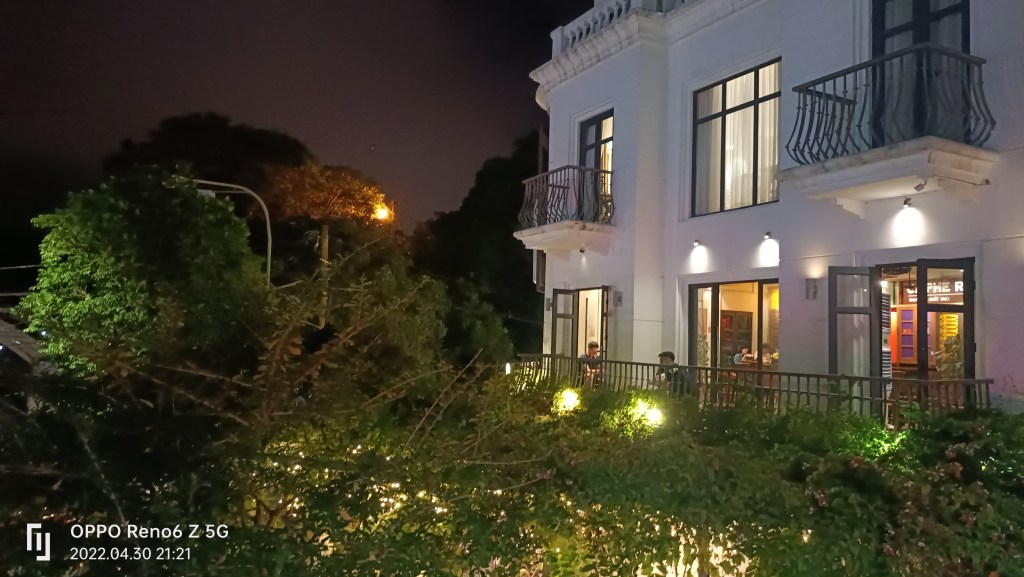

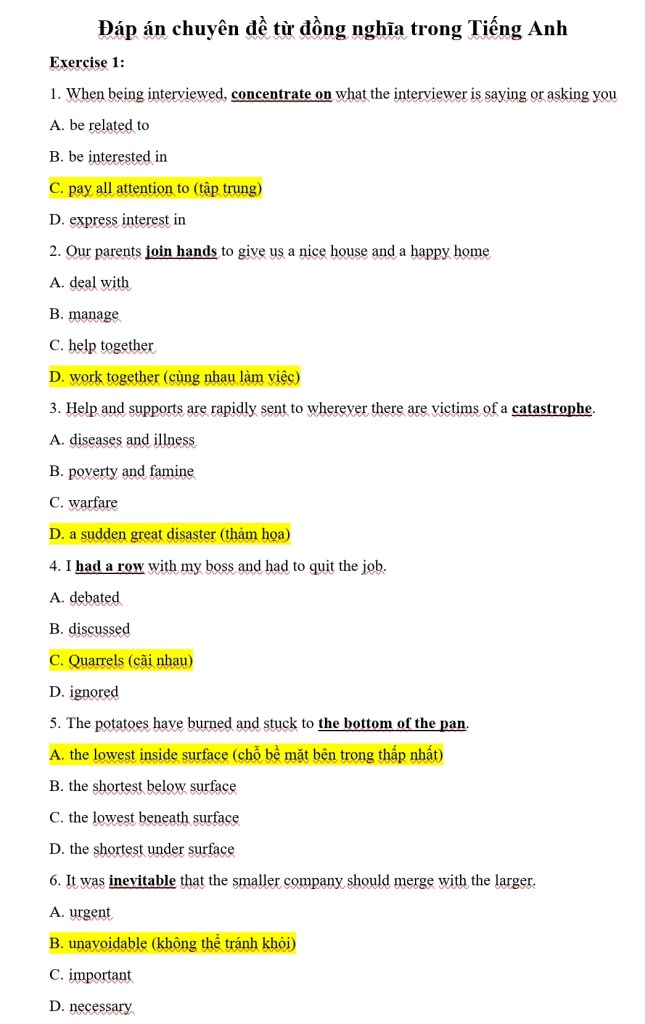
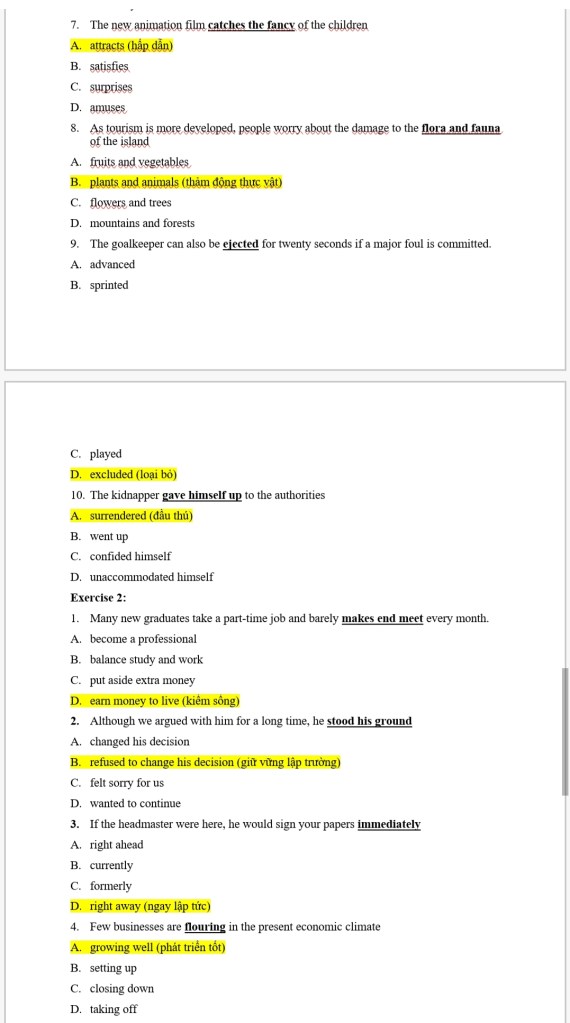
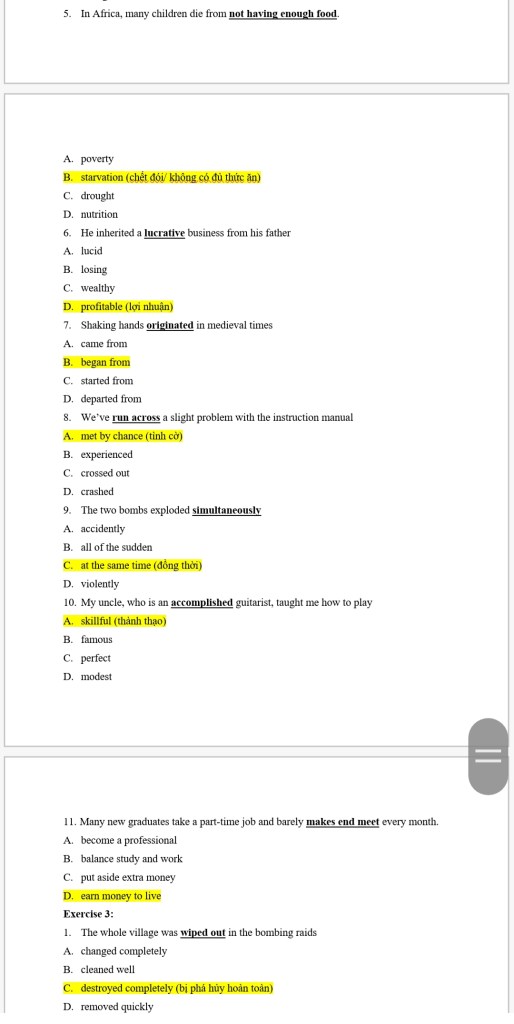

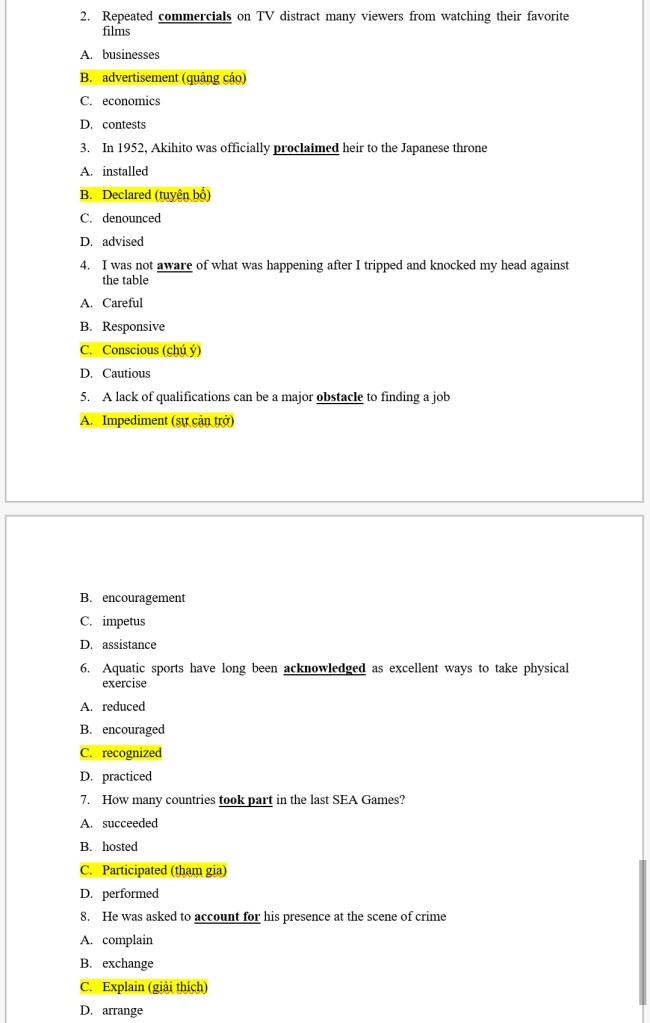

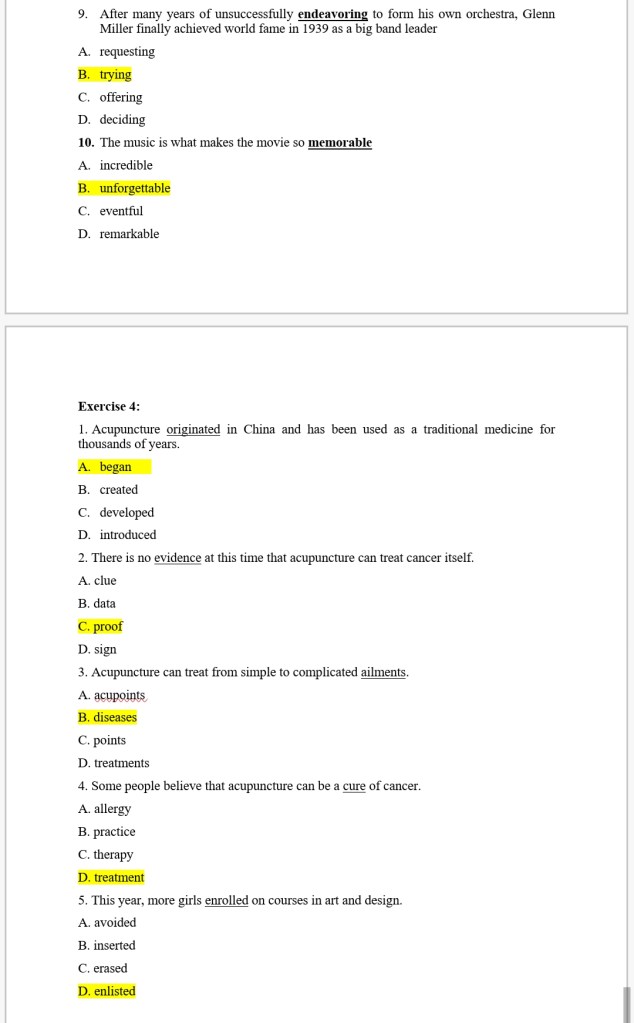
 ENGLISH GRAMMAR - Learning English - ÔN THI VÀO 10 THPT